

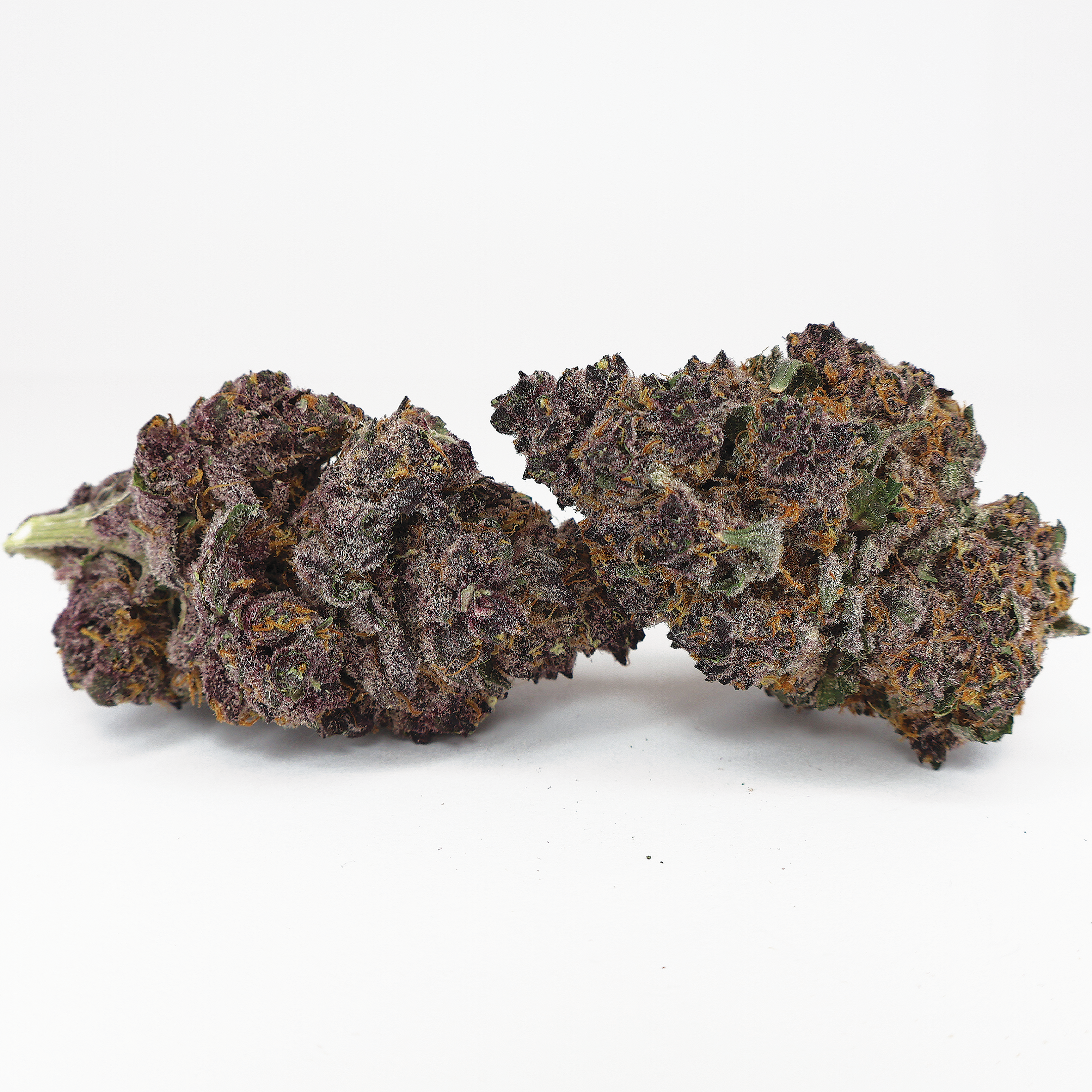
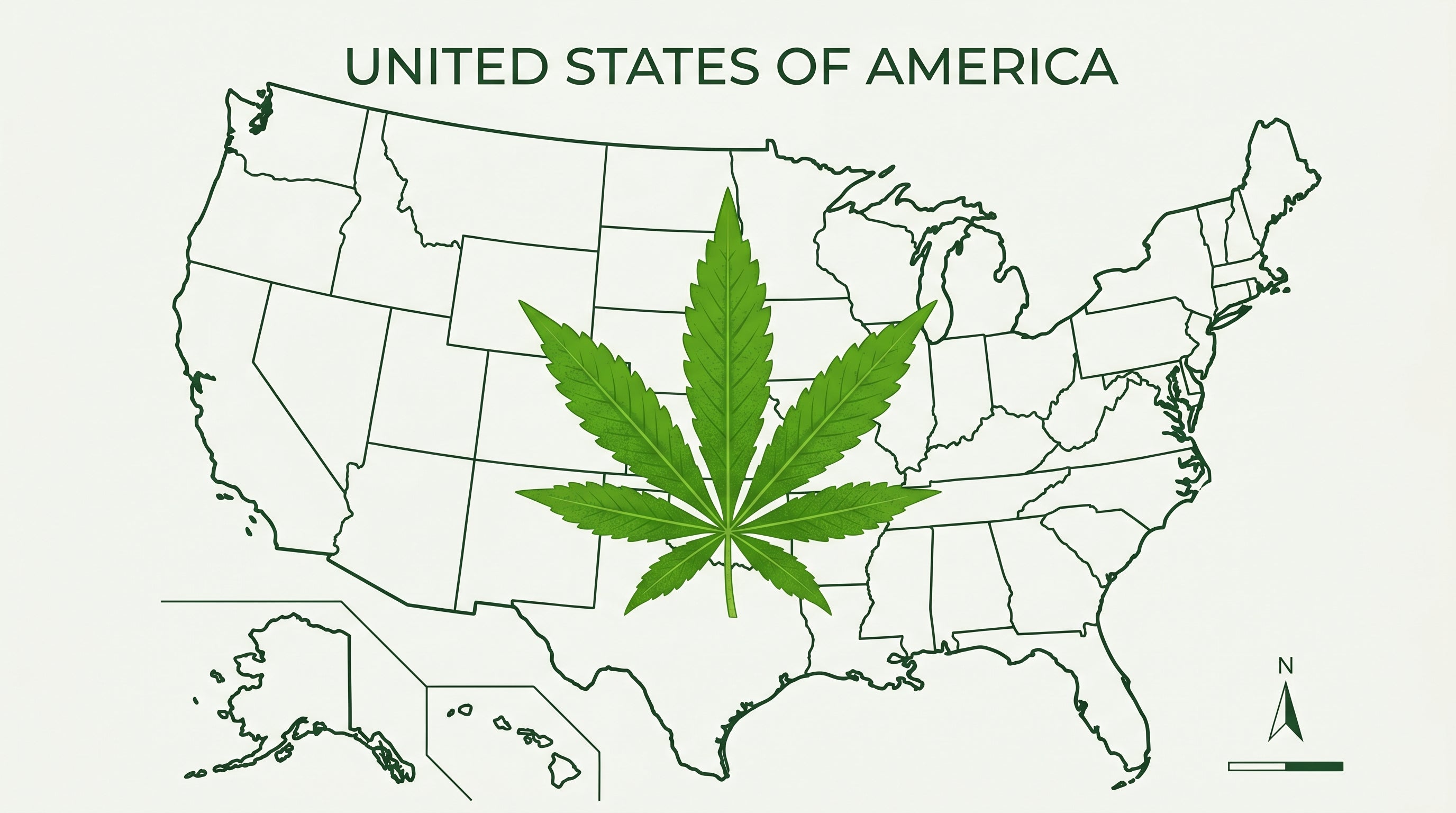
THCa flower, concentrates, and cartridges have become widely available online thanks to a specific provision in federal law. If you've wondered how a product that produces THC when heated can legally ship to most US states, the answer lives in one piece of legislation: the 2018 Farm Bill.
This guide explains how THCa is treated under federal law, where state laws come into play, what's changing in late 2026, and what to look for to know you're buying compliant product.
The 2018 Farm Bill in plain English
The Agriculture Improvement Act of 2018 — commonly called the Farm Bill — created a federal definition for hemp and a clear distinction between legal hemp and federally controlled marijuana.
Under the Farm Bill, hemp is defined as the Cannabis sativa L. plant and any part of it (including extracts, derivatives, isomers, and salts) containing no more than 0.3% delta-9 THC by dry weight.
That single threshold is the foundation of every legal hemp product sold in the United States today, including THCa flower, concentrates, vape cartridges, and edibles.
Anything below 0.3% delta-9 THC qualifies as hemp and is legal under federal law. Anything above qualifies as marijuana and is federally controlled.
How THCa fits the federal definition
THCa (tetrahydrocannabinolic acid) is the non-intoxicating precursor to delta-9 THC. In the raw, unheated hemp plant, almost all of the cannabinoid content exists as THCa rather than delta-9 THC. Only when heat is applied — through smoking, vaping, dabbing, or even prolonged sunlight — does THCa convert to delta-9 THC through a chemical process called decarboxylation.
Before decarboxylation, THCa is not psychoactive. Because the Farm Bill measures delta-9 THC content (not THCa content), hemp flower with high THCa concentrations can sit comfortably below the 0.3% delta-9 THC threshold and qualify as federally legal hemp — even though, when consumed, it produces effects similar to traditional THC products.
This is why our products carry the THCa label. They're sourced from federally compliant hemp grown in California, tested batch-by-batch to confirm delta-9 THC content stays below the 0.3% federal threshold.
Federal legality vs. state legality
Federal law sets the floor. State law adds the rest.
The 2018 Farm Bill makes hemp-derived THCa products federally legal across all 50 states for purposes of interstate commerce — but each state can impose its own rules on sale, possession, and shipping within its borders.
Here's how this plays out across the country:
- Most states (~38) allow THCa products under their hemp programs without significant restrictions.
- Several states restrict THCa to licensed marijuana dispensaries only (Colorado, Oregon, Minnesota, Montana, Nevada).
- A handful of states prohibit intoxicating hemp cannabinoids entirely (Idaho, Alaska, Iowa, Rhode Island, Vermont, Arkansas, Delaware, Hawaii).
- Some state policies are actively contested in court. Texas, for example, attempted to restrict THCa flower through state agency rules in early 2026, but a state district court issued a temporary injunction in May 2026 blocking enforcement while industry plaintiffs challenge the rules. The injunction extends through at least July 27, 2026.
Reputable retailers maintain a state-by-state shipping eligibility list that reflects the most current legal status. We update ours whenever a state law or court ruling changes shipping eligibility.
The "post-decarboxylation" question
Some state agencies have argued that the 0.3% threshold should apply to the total potential delta-9 THC in a product after decarboxylation — meaning they'd add THCa's potential post-heating conversion to the delta-9 count. Under that interpretation, most THCa flower would exceed 0.3% and become illegal.
The federal 2018 Farm Bill does not include a post-decarboxylation test. It measures delta-9 THC as it exists in the product before heating. State agencies that adopt the post-decarb interpretation are doing so on their own authority, and several have been challenged in court — the Texas case mentioned above is the highest-profile example.
For now, the federal definition holds, and federally compliant THCa products remain legal under federal law.
What's changing in 2026
The current Farm Bill is operating under a temporary extension that expires November 12, 2026. Congress will either pass a new Farm Bill or extend the existing one again before that date.
Discussions in Washington have included proposals to add hemp cannabinoid restrictions to a new Farm Bill, which could change how THCa and similar hemp products are regulated at the federal level. Whether any restrictions actually pass — and what they'd cover — is unsettled.
Here's what this means for THCa shoppers:
- Through November 12, 2026: the current legal framework remains in place. THCa products that meet the federal 0.3% delta-9 THC standard continue to be federally legal.
- After November 12, 2026: federal rules may change. We'll update our shipping policies and customer guidance immediately if anything material changes, and we'll notify customers of any changes that affect their ability to order.
How to verify a THCa product is compliant
Three things to look for when buying THCa online:
1. Lab-tested with a current Certificate of Analysis (COA). Every batch should have a third-party lab report showing delta-9 THC content below 0.3% by dry weight. The COA should be recent (typically within the past 12 months for the specific batch you're buying) and from an accredited lab. Reputable retailers publish COAs for every product. You can view our lab results here.
2. Sourced from federally compliant hemp. The seller should be transparent about where the hemp is grown and how it's tested. California-sourced hemp is held to some of the strictest cultivation and testing standards in the country.
3. Sold by a retailer that follows state shipping restrictions. A compliant retailer refuses to ship to banned states and updates shipping policies whenever state laws change. If a retailer ships everywhere with no questions asked, treat that as a warning sign.
Our compliance approach
- Every batch lab-tested with COA published before sale
- California-sourced THCa that meets the federal 0.3% delta-9 THC standard
- State shipping eligibility actively monitored and updated as laws change
- 21+ age verification required for every order
- No medical or therapeutic claims — we sell hemp products under the Farm Bill, not medicine
Bottom line
THCa products are federally legal under the 2018 Farm Bill as long as they test below 0.3% delta-9 THC by dry weight before decarboxylation. State law matters — some states restrict or ban THCa even though federal law allows it. The legal framework holds through November 12, 2026, when the current Farm Bill extension expires.
When buying online, look for batch lab testing, a published COA, federally compliant sourcing, and a retailer that follows state shipping rules.
Looking for federally compliant THCa flower, concentrates, or cartridges? Browse the full Miracle of the Desert shop or start with our Reserve tier for our highest-quality flower selections.
Frequently asked questions
Is THCa the same thing as THC?
No. THCa (tetrahydrocannabinolic acid) is the non-intoxicating precursor to delta-9 THC. It only converts to THC when heated. Raw THCa flower contains very little delta-9 THC, which is why it qualifies as federally legal hemp under the 2018 Farm Bill.
Can THCa cause a positive drug test?
Drug tests typically screen for THC metabolites, which the body produces after consuming THC — including THC converted from THCa during smoking, vaping, or dabbing. If you consume THCa products in any form that involves heat, you should expect that a drug test could come back positive. Raw, unheated THCa is unlikely to produce a positive result, but most consumption methods involve heating.
Is THCa legal in my state?
Federal law makes THCa legal nationwide, but individual states can and do impose their own restrictions. As of mid-2026, THCa is allowed in most states, restricted to licensed dispensaries in a handful, and banned outright in roughly eight. Check our shipping policy for the most current list of states we ship to.
Will the Farm Bill really expire on November 12, 2026?
The current extension expires on that date. Congress is expected to either pass a new Farm Bill or pass another extension before then. The exact form of any new legislation, and whether it includes new restrictions on hemp cannabinoids like THCa, is still being debated.
What's the difference between hemp and marijuana?
Federal law draws the line at 0.3% delta-9 THC by dry weight. The same plant species — Cannabis sativa L. — is legally hemp below that threshold and federally controlled marijuana above it. THCa products that test below the threshold are hemp, not marijuana, regardless of how potent the experience may feel after decarboxylation.
Where can I see Miracle of the Desert's lab results?
Every product has a publicly available COA. View our complete lab results page here.
Share:
What Is the Entourage Effect — Understanding the Power of THCa Synergy